
The rapid development of low-altitude aerial systems is transforming unmanned aviation, intelligent transportation, urban air mobility, and aerial services. Emerging low-altitude environments require intelligent agents that can perceive dynamic surroundings, make autonomous decisions, communicate and cooperate with heterogeneous platforms, and safely operate in complex and uncertain airspace. This session focuses on the foundations, technologies, and applications of low-altitude intelligence, with particular emphasis on autonomous agents, multi-agent coordination, learning, perception, communication, planning, and control.
随着无人航空、智能交通、城市空中交通及低空服务的快速发展,低空空间正逐步演变为高度动态、异构互联和智能自主的新型应用环境。面向复杂、不确定的低空场景,智能体需要具备环境感知、自主决策、协同通信、任务规划与安全控制等能力。本专题聚焦低空智能的基础理论、关键技术与典型应用,重点探讨自主智能体、多智能体协同、学习、感知、通信、规划与控制等方向。
Topics (Including but not limited to) 征稿主题包括但不限于:
- Intelligent and autonomous aerial agents ·低空智能体与自主系统
- Multi-agent systems and cooperative intelligence 多智能体系统与协同智能
- Perception, sensing, and situational awareness 环境感知、传感与态势认知
- Autonomous decision-making, planning, and control 自主决策、路径规划与控制
- Multi-agent coordination and task allocation 多智能体协同与任务分配
- Learning and reinforcement learning for low-altitude systems 低空系统中的机器学习与强化学习
- Communication, networking, and connected intelligence 低空通信、网络与互联智能
- Swarm intelligence and collaborative autonomy 群体智能与协同自主
- Air-ground and heterogeneous agent cooperation 空地协同与异构智能体协作
- Digital twins and simulation for low-altitude intelligence 低空数字孪生与仿真
- Safety, reliability, security, and trustworthy autonomy 安全性、可靠性、可信自主与系统安全
- Applications in UAVs, urban air mobility, logistics, inspection, and emergency response 无人机、城市空中交通、物流、巡检及应急
Organizer: Prof. Minghui Liwang, Tongji University, China
 Minghui Liwang (Senior Member, IEEE) is currently an Associate Professor with the Department of Control Science and Engineering, Shanghai Research Institute for Intelligent Autonomous Systems, State Key Laboratory of Autonomous Intelligent Unmanned Systems, and Frontiers Science Center for Intelligent Autonomous Systems, Tongji University, China. Her research interests mainly include artificial intelligence, services/edge computing, and economically inspired intelligent networking systems. She has established a solid scientific foundation and accumulated extensive research experience in these areas. She has published over 100 papers in leading journals and conferences, including IEEE JSAC, IEEE TMC, IEEE TPDS, IEEE TSC, IEEE TWC, IEEE TCOMM, IEEE/ACM TNET, IEEE TII, IEEE TCCN, etc. Her research works have received broad academic recognition, including selections in IEEE Best Readings (IEEE TPDS, entitled “CHEESE: Distributed Clustering-Based Hybrid Federated Split Learning Over Edge Networks”) and conference Best Paper Awards (e.g., ACC6G 2026). Prof. Liwang has been recognized by multiple talent programs and professional honors, including the Fujian Provincial High-Level Talent Program (2023), the Shanghai Magnolia Talent Program (AI Shortage Talent Category, 2024), and elevation to IEEE Senior Member (2025). She also received the Second Prize of the China Service Industry Science and Technology Innovation Award (2024) and the Rising Star Award from the Shanghai Computer Society (2025) in the field of services computing. In addition, she contributed to the formulation of a Guizhou provincial technical standard officially implemented in January 2025. She currently serves as an Associate Editor of IEEE Transactions on Services Computing and has actively participated as a chair or Technical Program Committee member for numerous high-level international conferences.
Co-organizer: Prof. Tianqi Yu, Soochow University, China
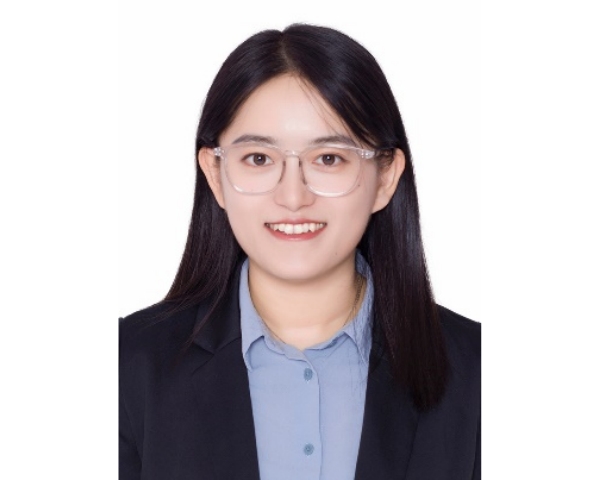 Tianqi Yu (Senior Member, IEEE) received her Ph.D. degree from Western University, Canada. She is currently an Associate Professor at Soochow University, China. Her research interests include network modeling and optimization, network security, edge intelligence, and related applications in IoT/IoV/FANETs. She has published more than 40 academic papers (received one IEEE Best Paper Award) and hosted several projects. Dr. Yu currently serves as an Associate Editor for IEEE Transactions on Network and Service Management (IEEE TNSM). She has been involved in the organization of multiple IEEE conferences, serving as Symposium Chair/Session Chair/Publicity Co-Chair/TPC Member. She previously served as the Vice-Chair of the IEEE London Section Joint Communications and Broadcasting Chapter.
Co-organizer: Prof. Wei Gong, Tongji University, China
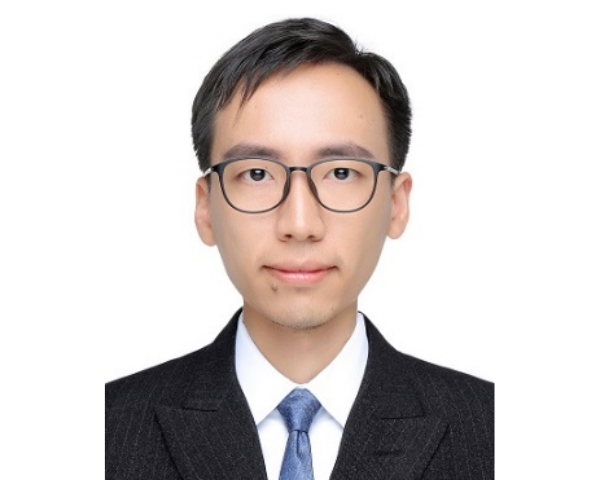 Wei Gong is an Associate Professor at Tongji University and a recipient of the Shanghai Pujiang Program. He received his bachelor's degree from Zhejiang University and his Ph.D. degree from the University of Chinese Academy of Sciences. He subsequently conducted postdoctoral research at Western University, Canada. He currently serves as Secretary-General of the Internet of Things Technical Committee of the Shanghai Computer Society and as an Associate Editor of IEEE Transactions on Network and Service Management. His research interests include UAV cooperation and distributed training and inference of large language models. He has served as the principal investigator of one project funded by the National Natural Science Foundation of China and one subproject under the National Key Research and Development Program of China. He received the First Prize of the Technical Invention Award from the Chinese Association of Automation. He has published more than 30 high-quality academic papers and holds 12 granted Chinese invention patents.
※ Important Dates | 重要日期
|
※ Submission Guideline / 投稿指南Template Download: WORD Formatting.doc (文章模板下载) | LaTex Template Please log in the
Submission System; ( .pdf only) to submit your full paper and abstract. |