
Next-generation Internet of Things (IoT) systems increasingly combine sensing, wireless connectivity, machine learning and autonomous control across cloud, edge and device layers. This integration creates new opportunities for low-latency intelligence, but also raises practical challenges involving resource allocation, energy efficiency, privacy, robustness, explainability and the fidelity of digital-twin models. The special session will bring together communication, networking, artificial-intelligence and IoT researchers working on trustworthy edge intelligence and secure closed-loop systems. It will emphasise reproducible methods, realistic network assumptions and evidence from simulation, emulation, testbeds or field deployments.
下一代物联网系统正在将感知、无线连接、机器学习和自主控制融合到云—边—端协同架构中。本专题聚焦可信边缘智能与安全闭环物联网,讨论低时延智能、资源调度、语义通信、数字孪生、隐私保护学习、零信任与轻量级安全、5G/6G网络、无线感知以及测试床和实际部署验证。专题欢迎原创研究、系统演示和有充分证据支持的全文。
Topics (Including but not limited to)
- AI/ML-based resource management, orchestration and learning at the edge
- Semantic, task-oriented and goal-oriented communications for IoT and 5G/6G networks
- Digital twins for sensing, monitoring, predictive maintenance and closed-loop control
- Privacy-preserving, federated, split and continual learning for distributed IoT
- Secure and trustworthy IoT: zero-trust architectures, lightweight cryptography, trusted execution and adversarial robustness
- Edge intelligence for RIS, ISAC, wireless sensing, industrial IoT, smart cities and healthcare
- Testbed, OTA, emulation and deployment studies that quantify latency, reliability, energy, security or task-level performance
Chair: Assoc. Prof. Karim H. Moussa, Xi’an Jiaotong-Liverpool University (XJTLU), China
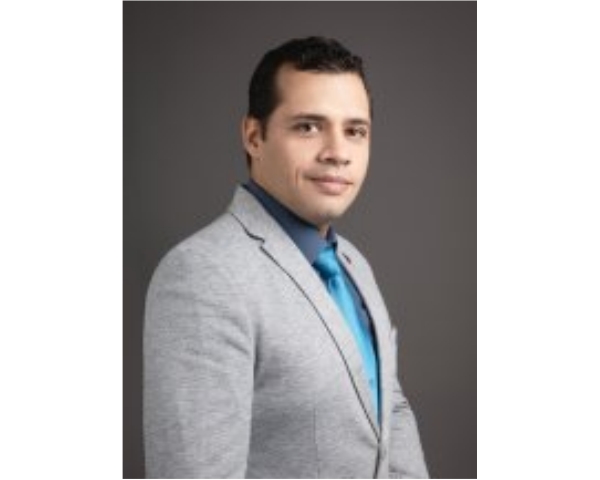
Dr. Karim H. Moussa is an Associate Professor in the School of Internet of Things, XJTLU Entrepreneur College (Taicang), Xi’an Jiaotong-Liverpool University. He received his Ph.D. in Electrical Engineering (Communications and Electronics) from Alexandria University. His research interests include wireless communications, 5G/6G edge networks, AI-enabled and semantic communications, IoT security, signal processing and chaotic cryptography. His peer-reviewed work has appeared in venues including IEEE Access, IEEE Systems Journal, China Communications, Wireless Networks, Scientific Reports, Nonlinear Dynamics and Multimedia Tools and Applications. He contributes to IoT programme and curriculum development, research-led teaching, peer review and technical-programme service. His work connects communication theory and trustworthy AI with reproducible edge-network and IoT applications.
Co-chair: Prof. Feng Wu, Changzhou Institute of Technology, China
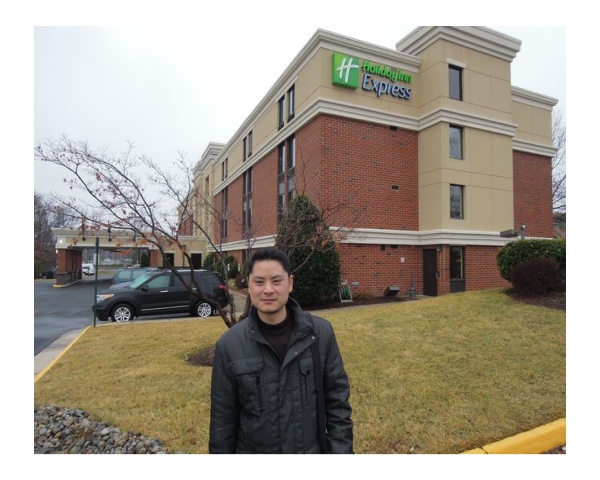 Wu Feng is a professor from Changzhou Institute of Technology, China. He is the leader of the scientific and technological innovation team of Jiangsu province, and Key Laboratory of Intelligent Perception and Unmanned Aerial Vehicle Application Research of Jiangsu Higher Education Institutions. His interests focus on the technology about intelligent connected vehicle, the artificial intelligence and image processing. He has published over 30 scientific papers, obtained about 20 patents for invention. He was awarded the Science and Technology Invention Award of Ministry of Education of the People’s Republic of China, and Jiangsu Provincial Science and Technology Award .
※ Important Dates | 重要日期
|
※ Submission Guideline / 投稿指南Template Download: WORD Formatting.doc (文章模板下载) | LaTex Template Please log in the
Submission System; ( .pdf only) to submit your full paper and abstract. |