
The open integration and intelligent interconnection of 6G wireless communication systems make information security an unprecedented significant and challenging issue. 6G is envisioned to realize endogenous security, which starts from common and inherent security problems of wireless communication systems and can resist unknown wireless security threats and integrate communication/security/services via structure-oriented solutions. Although appealing wireless communication security technologies, such as information-theoretical security, have drawn significant research interest during the past decade, what role they will play for 6G is still an open issue. Plenty of further research efforts are needed to explore new paradigm and advanced solutions to achieve stronger security for 6G. This special session aims to bring together novel contributions to explore the opportunities, challenges, and solutions related to wireless communication systems security for 6G.
6G无线通信系统的开放融合与智能互联,使得信息安全成为一个前所未有的重要且具有挑战性的问题。6G有望实现内生安全,从无线通信系统常见的固有安全问题出发,抵御未知的无线安全威胁,并通过结构化解决方案实现通信、安全和服务深度融合。尽管在过去十年中,信息论安全等富有吸引力的无线通信安全技术得到广泛关注和研究,但它们在6G中会发挥怎样的作用仍然是一个开放问题。我们需要开展大量深入的研究工作,探索新的范式和先进的解决方案,以实现6G更强的安全性。本次专题论坛旨在汇集新颖的研究成果,探索与6G无线通信系统安全相关的机遇、挑战和解决方案。
We solicit high-quality original technical papers on the following topics but not limited to:
- New research paradigm and fundamental limits
- Emerging wireless applications, including ambient Internet of Things (AIoT), cell-free networks, edge computing/learning/intelligence, embodied intelligence, cellular-vehicular-to-everything (C-V2X), unmanned aerial vehicle (UAV), low earth orbit (LEO) satellites, integrated satellite-air-terrestrial-maritime networks
- State-of-the-art wireless technologies, including reconfigurable intelligent surface (RIS), movable/fluid/rotatable/pinching antennas, orthogonal time frequency space (OTFS) modulation, integrated sensing and communication (ISAC), near-filed communications (NFC), massive MIMO, mmWave/THz/optical communications, semantic communication, and quantum communication
- Innovative system design, including signaling, waveform, coding, modulation, beamforming, and propagation
- Multi-mode security mechanisms, including cryptography, encryption, authentication, zero-trust-architecture, blockchain, physical-layer security, covert communications, and quantum security
- Artificial intelligence (AI), including deep learning, reinforcement learning, machine learning, federated learning, large language model, wireless foundation model, and world model
- Cross-layer architecture and design
- System-level simulation, prototyping, and experimentation
Chair: Prof. Tongxing Zheng, Xi’an Jiaotong University, China

Tong-Xing Zheng received the B.S. degree in Information Engineering and Ph.D. degree in Information and Communications Engineering from Xi’an Jiaotong University, Xi’an, in 2010 and 2016, respectively. From 2017 to 2018, he was a Visiting Scholar with the School of Electrical Engineering and Telecommunications, University of New South Wales, Sydney, Australia. He is currently a Professor with Xi’an Jiaotong University. His research interests include 6G wireless communications, physical layer security, covert communications, reconfigurable smart antennas, and integrated sensing and communications. He has published 3 book/chapters and 150+ papers. He was a recipient of Excellent Doctoral Dissertation Award of Shaanxi Province in 2019, Excellent Young Scholar with Xinghang Program of Journal of Electronics & Information Technology, and Best Paper Awards at Ucom 2023, ISCTech 2024, ICCBD+AI 2024, IoTCIT 2025, and IoTCIT 2026. He was honored as an Exemplary Reviewer of IEEE TRANSACTIONS ON COMMUNICATIONS in 2017, 2018, and 2021. He is currently serving as an Associate Editor for IEEE OPEN JOURNAL OF THE COMMUNICATIONS SOCIETY and IET ELECTRONIC LETTERS, a Young Editorial Board Member for TELECOMMUNICATIONS SCIENCE, JOURNAL ON INTERNET OF THINGS, and UNMANNED SYSTEMS TECHNOLOGY. He served as Conference Program Chair/Publication Chair/Session/Workshop Chairs/TPC member for various IEEE conferences.
Co-chair: Prof. Ying Ju, Xidian University, China
 Ying Ju received the B.S. and M.S. degrees from the School of Electronic Information Engineering, Tianjin University, Tianjin, China, in 2008 and 2010, respectively, and the Ph.D. degree from the School of Electronic and Information Engineering, Xi'an Jiaotong University, Xi'an, China, in 2018. From 2016 to 2017, she was a Visiting Scholar at the Department of Computer Science, University of California, Santa Barbara, USA. From 2010 to 2018, she was a Senior Engineer at the State Radio Monitoring Center, Xi'an, China. She is currently a Professor with the Department of Telecommunications Engineering, Xidian University, Xi'an, China. Her research interests include physical layer security of wireless communications, millimeter wave communications, vehicular networks, and AI in wireless communication systems. She has published over 60 papers in the field of wireless communications and has applied for more than 30 patents. She also serves as a reviewer for journals and conferences in the field of communications.
Co-chair: Assoc. Prof. Xuran Li, Shandong Normal University, China
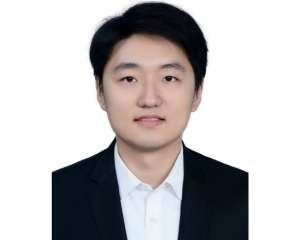 Xuran Li received his Ph.D. degree from the Faculty of Information Technology, Macau University of Science and Technology, in 2018. He is currently an Associate Professor and Master’s Supervisor at the School of Communications and Electronic Engineering, Shandong Normal University, and serves as Deputy Director of the Department of Communication Engineering. His research interests include wireless communication networks, physical layer security, and medical physics. He is currently the principal investigator of one national-level research project and two provincial-level research projects, and has participated in multiple national and provincial research programs. He has published more than 40 academic papers in leading journals in the communications field, including IEEE JSAC and IEEE TCOM, as well as flagship conferences such as IEEE ICC and IEEE GLOBECOM. He received the Best Paper Award at IEEE CCAI 2025 and the 2022 Outstanding Paper Award from the CHINESE JOURNAL ON INTERNET OF THINGS. He serves as a member of the Communication and Microwave Technical Committee and the Aerospace Information Technical Committee of the Shandong Institute of Electronics, as a Guest Editor for journals including NETWORK, and as a Young Editorial Board Member for the JOURNAL OF COMMUNICATIONS AND INFORMATION NETWORKS (JCIN) and the CHINA COMMUNICATIONS. He has delivered invited talks at international conferences including IEEE ICTC 2026, IEEE WOCC 2025, and IEEE CCAI 2025. He has also served as a Session Chair for international conferences including NCIC 2024, IEEE CCAI 2025, NCIC 2025, AICTech 2026, and IEEE CCAI 2026. In addition, he serves as a Technical Program Committee (TPC) member for various IEEE conferences and as a reviewer for multiple leading international journals.
Co-chair: Prof. Haiyang Ding, Engineering University of Information Support Force, China
 Haiyang Ding (Member, IEEE) received the B.Sc. degree in communications engineering from the Xi’an Communications Institute, Xi’an, China, in 2003, the M.Sc. degree (Hons.) in electrical engineering from the Beijing University of Technology, Beijing, China, in 2006, and the Ph.D. degree (Hons.) in telecommunications engineering from Xidian University, Xi’an, in 2013. From 2016 to 2017, he was a Visiting Scholar with the Department of Electrical Engineering, Columbia University, New York. From June 2017 to April 2025, he was with the faculty of the School of Information and Communications, National University of Defense Technology, first as an associate professor and then a full professor since December 2020. Since June 2025, he has been with the Engineering University of Information Support Force as a full professor. His research interests include backscatter communications, RIS-enabled communications, symbiotic radio, cooperative communications and cognitive radio systems. He was a recipient of the Research in Motion Wireless Research Scholarship from Xidian University in 2012, the IEEE COMMUNICATIONS LETTERS Exemplary Reviewer Certificate in 2013, the IEEE TRANSACTIONS ON COMMUNICATIONS Exemplary Reviewer Certificate in 2014, and the Excellent Ph.D. Dissertation Certificate of Shaanxi Province in 2015. He has served as an Editor for the IEEE OPEN JOURNAL OF THE COMMUNICATIONS SOCIETY and a Guest Editor for the IEEE TRANSACTIONS ON COGNITIVE COMMUNICATIONSAND NETWORKING.
※ Important Dates | 重要日期
|
※ Submission Guideline / 投稿指南Template Download: WORD Formatting.doc (文章模板下载) | LaTex Template Please log in the
Submission System; ( .pdf only) to submit your full paper and abstract. |